PRODUCT ENGINEERING / CONNECTED BUSINESS SYSTEMS
OmnistuSTUDIO / SERVICESStart a project
Omnistu logoOmnistu
Proposed platform package

Uber Clone

A proposed Uber-style ride-hailing package - rider and driver apps, admin panel and web booking, rebranded for your business. Scope agreed in writing before any build starts.

Build scopeConfirm servicesDefine the features and exclusions
Delivery planAgree milestonesNo fixed launch duration implied
Source rightsWritten termsCheck licences and handover
OperationsTest before launchAgree acceptance and support
Operator admin live trips and payouts

Illustrative concept - generated design illustration, not a working app

Rider appDriver appOperator adminWeb bookingProposed scope, agreed in writing
01 / The package

What the proposed package covers

Omnistu builds location-based mobile apps; this proposed white-label taxi-booking package maps real-time tracking and payment options - cash, cards and wallet - in its standard scope. What gets built is agreed in a written scope before any build starts.

  • Faster market entryA ready base instead of a from-scratch build.
  • Room to growScoped for growth, with hosting and configuration to match.
  • A familiar ride experienceFlows riders and drivers already understand, rebranded for your business.
  • Your own feature setScope your own features and marketing.

Proposed scope, branded as yours

Planned in writing with you.

  • Ride Hailing & Dispatch
  • Fare, Wallet & Ratings
  • Driver & Rider Apps
  • App Publishing Support
  • Bug fixes and updates - terms in writing
Put in writing for every project
Scope and quoteStaged deliveryDevice-tested buildsSupport termsYour store accountsPayment in three stepsOne team, start to finishSource code handoverWhite-label branding

Daily Rides

On-demand daily rides - commuting and short trips.

Share Pool Rides

Shared rides that let users split trips.

Rentals & Outstation

Longer rentals and outstation journeys alongside daily rides.

Driver Subscription

An optional driver subscription model with a recurring fee.

02 / Features

Features of the Uber-style platform

The proposed package includes features such as route suggestions and multi-language support. What gets built is agreed in a written scope - nothing here is a live feature of this preview.

  1. 01

    Route Optimization

    Driver navigation with route suggestions, through the map service you choose.

  2. 02

    Integrated Multi-language Support

    Interface languages matched to the markets you launch in.

  3. 03

    Cashless Transactions

    Digital payments through the providers you choose, under their terms.

  4. 04

    Fare Estimates

    An estimated fare shown to riders before they book.

  5. 05

    Live Driver Tracking

    Riders follow their driver's approach on the map.

  6. 06

    Emergency SOS Button

    An in-app emergency-contact option; it is not a safety guarantee.

  7. 07

    In-app Chat Support

    Riders reach your support team without leaving the app.

03 / Surfaces

Features across Web, App, and Admin

The same scope viewed by surface: what riders use, what happens during a ride, and what your operations team manages.

Booking and payment

  • Intuitive Booking Interface - Request a ride to a chosen destination in a few steps.
  • Multi-modal Transportation - Daily rides, rentals and share-pooling in one catalogue.
  • Secure Payment Gateways - Digital payments through providers you choose, under their terms.
  • In-app Wallet - A digital wallet riders can top up for checkout.
  • Scheduled Bookings - Advance ride scheduling for later trips.

During the ride

  • Real-time Tracking - Ride tracking on the map for riders and dispatch.
  • Location Services - GPS-based location for matching and navigation.
  • Driver Messaging - Direct rider-driver messaging inside the app.
  • Push Notifications - Alerts for confirmations, arrivals and updates.
  • Emergency Assistance - An in-app emergency-contact button; it is not a safety guarantee.
  • Ride History and Ratings - A history of past rides, with rider ratings and feedback stored for review.

Admin, fleet and operations

  • Dashboard Analytics - Trip, user and driver metrics for your team to review.
  • Fleet Management - Admin tools for driver profiles, vehicle details and allocation.
  • Dynamic Pricing Control - Admins can adjust pricing rules by demand and supply.
  • User Management - Account management and dispute-handling tools.
  • Promotions and Marketing - Tools to create and manage promotional campaigns.
  • Reports and Analytics - Exports of key metrics for your review.
04 / The journey

How a trip flows - the rider journey

Eight steps, one route. The numbers on the map match the steps beside it - an illustrative diagram of the proposed flow.

01 02 03 04 05 06 07 08 PICKUP DROP-OFF
  1. 01

    User Registration

    Riders create an account with their details and credentials.

  2. 02

    Location Selection

    Pickup and drop-off go on the map.

  3. 03

    Ride Options

    Daily rides, rentals or share-pooling.

  4. 04

    Fare Calculation

    An estimated fare from distance and the chosen service.

  5. 05

    Driver Matching

    An available driver is found, with an estimated arrival time.

  6. 06

    Real-time Tracking

    Riders watch the driver approach on the map.

  7. 07

    Ride Experience

    The trip itself, with the option to rate it afterward.

  8. 08

    Payment and Receipt

    Payment in the app, and a digital receipt.

05 / Benefits

Benefits and Implementation

A ready-made base is proposed as a faster starting point than a custom build. The timeline is agreed in writing and no launch date is promised.

  • Ready-made base as the starting pointConfiguration to your needs, rather than a from-scratch build.
  • A current technology stackModern, maintained components.
  • Configuration to your needsShaped to how your operation works.
  • Integration with your systemsConnected to what you already run.

Access points in the proposed package

Rider app

iOS and Android.

Driver app

iOS and Android.

Web panels

Booking and operations panels in the browser.

Admin console

The management console for your team.

Scope is agreed in writing by message before any build starts.

Rider, driver, dispatch, fleet and business surfaces

The source material describes rider mobile, driver mobile with a fleet role, browser booking, admin and corporate access. It calls this five applications while also naming dispatcher and fleet logins. Agree the actual applications, role boundaries and code repositories rather than treating that label as a fixed package.

Rider mobile and browser

Map guest browsing, OTP, Google or Apple sign-in, saved/recent places and map pins. The rider selects a service and vehicle, compares an itemised estimate and ETA, books for self or another person, then tracks, pays, rates or rebooks. Agree which of these paths the browser also supports.

Driver mobile

The proposed driver path includes sign-in, availability, live map, timed offer, accepted job, pickup verification, trip detail, completion, earnings and support. Define the record returned after reconnect, document expiry and eligibility checks before an offer can be accepted.

Dispatch desk

Phone bookings need the same service, zone, vehicle, price and trip record as app bookings. Scope manual assignment, cancellation and reassignment with an audit trail; reject offline, ineligible or busy drivers and remove obsolete offers from other devices.

Fleet-manager role

Separate fleet-owned drivers and vehicles from platform-wide administration. Scope the fleet map, driver/vehicle documents and expiry, earnings by period, payout responsibility and permitted exports. A fleet must not read another fleet’s trips or balances.

Corporate portal

Define company membership, departments, approvers, booking policies, permitted travellers, company wallet or credit rules, invoice cycle and billing disputes. Trip visibility, personal data and delegated bookings must follow the company role and rider permissions.

Operator admin

Inventory ride requests, rider profiles, segments, vehicle types, zones, peak zones, heat maps, surge, documents, incentives, companies, invoices, payment settings, complaints and notifications. Agree CSV/Excel/PDF export contents, per-role access and retention.

Separate trip services need separate rules

The source names cab, parcel, freight, ambulance, rental and hired-driver journeys, but elsewhere labels the scope as five services. This page preserves the named journeys without resolving that inconsistency by dropping one. Select each service and its legal, safety and operating rules explicitly.

Cab, pool and scheduled rides

Define city, intercity, one-way, round-trip and outstation paths separately. Existing source also includes shared-pool rides and driver subscriptions. Pool capacity, compatible routes, detour/wait limits and per-rider cancellation or payment need their own decisions.

Parcel delivery

The recorded scope includes weight-based pricing and delivery OTP. Specify sender, recipient, weight/size bands, prohibited items, custody evidence, failed handover, return-to-sender, loss/dispute handling and the point at which a job is complete.

Freight

The source includes a cargo photo. Add load dimensions, capacity, vehicle eligibility, pickup/drop access, loading responsibility, wait charges, proof of delivery and damage claims to the agreed job record. Do not assume a passenger vehicle is eligible.

Ambulance transport

A named ambulance journey and location tracking are recorded scope, not a verified emergency-dispatch or medical service. Assess licensed providers, clinical/non-clinical transport limits, escalation, local emergency guidance, equipment requirements and staff availability before offering this service.

Hourly rental and longer trips

Agree packages, included distance/time, waiting, additional kilometres, tolls, overnight/return conditions and changes after pickup. Show the selected package and potential extras before confirmation and reconcile the final bill against the recorded trip.

Hire a driver

The source proposes daily pricing for a driver using the customer’s vehicle. Define licence checks, customer vehicle/insurance requirements, hours, overtime, breaks, return arrangements, incident ownership and a cancellation or no-show policy.

Vehicle and operator categories to assess include taxi fleets, tourism/airport transfers, motorbike taxis and auto-rickshaws. Define permitted passenger/load capacity, required protective equipment, local eligibility, fare rules and operator responsibilities per category; a vehicle selector does not settle those requirements.

Dispatch, scheduling and reconnect acceptance paths

These operating paths turn the recorded feature list into testable scope. They are not evidence of running software. Agree the state machine, timeouts, permissions and acceptance results before release.

Timed dispatch offer

Create one request with service, zone and vehicle requirements. Find an eligible available driver, issue a server-timed offer and record accept, decline or expiry. Pass it to another eligible driver only while the request remains open. Define search limits and the rider’s no-driver result.

Competing acceptance and manual assignment

When app acceptance races with the dispatcher or another driver, allow one assignment. The losing action receives the current trip state, not a second booking. Mark other offers unavailable, preserve who changed the assignment and re-check driver eligibility at commit.

Driver cancels or disconnects

Define whether a cancellation reopens dispatch, requires an operator or cancels the trip. On reconnect, restore the server’s current offer/trip instead of reviving an expired offer. Reconcile push, websocket and polling events by trip ID and version.

Scheduled pickup

Record pickup time and timezone, minimum lead time, change/cancel deadline and the point at which dispatch begins. Define no-driver and unaccepted-request handling with rider notification and payment release/refund rules. Scheduling a request is not a guarantee that a driver will accept.

Start, track and complete

Agree rider OTP and arrival/start/end permissions. Store status history, expected route and location freshness; a stale map marker is not a current position. Define lost-connection behavior, help requests, final fare review, receipt, rating and rebooking.

Mid-trip stop or destination change

Quote the route and fare change before rider approval, including waiting minutes and later per-minute charges. Store approved stops in order, update the route and give both parties the accepted revision. Reject or flag a change that cannot safely be fulfilled.

Price, payment and settlement are separate records

Keep the source’s fare, wallet, plans, withdrawals, company billing and commission topics, while defining money movement and reconciliation rather than assuming a successful gateway response.

Estimate and final fare

Itemise distance, time, waiting, service/package, zone/vehicle/time surge, promo, tolls and approved extras. Decide estimate expiry, rounding, tax and cancellation fees. Show rider consent before a chargeable change, and retain the fare-rule version used for the trip.

Payment attempt and uncertain response

Agree supported cash, wallet, gateway or company methods. Treat authorization, capture, failure, expiry and refund separately from trip status. If a callback is delayed or duplicated, reconcile by provider transaction ID before retrying; never create a second charge because the screen timed out.

Driver earnings and withdrawals

Define gross fare, commission, fleet share, incentives, toll reimbursement, adjustments, holds and available balance. Separate a withdrawal request from provider submission and settled payout; record failures and reversals. Do not permit the same available earnings to be withdrawn twice.

Company wallet and invoicing

Set credit or prefunded balance rules, approver limits, invoice period, traveller/department allocation and dispute workflow. Agree whether trip completion consumes a balance, creates receivables or awaits approval. Adjustments must connect back to the original trip and invoice.

Commercial model choices

Compare marketplace commission, driver subscriptions, fleet-led or dispatch-led operation, cancellation charges and optional premium services. Set rates and permitted fees in the agreement. Launch/traction/scale labels in the source are scenarios, not a forecast of income or a required sequence.

Plans, promotions and platform costs

Specify subscription renewal/cancellation, referral eligibility, incentive goals, coupon budgets and processing-cost allocation. Advertising, sponsored promotion or affiliate links are optional separately approved product scope, not an ad integration in this review site.

Operator controls, safety and architecture to review

The source offers an implementation stack as well as features. Keep that detail visible, distinguish it from the existing page’s proposed stack and choose one tested architecture in the delivery agreement.

Map and pricing administration

Scope editable service zones, peak zones, per-vehicle/time surge and notifications to driver maps. Define precedence when zones overlap, draft/review/publish steps, effective times, audit records and the treatment of trips already quoted.

Safety and complaints

Agree document verification, expiry, emergency contacts, SOS with location, a permitted tracking-share link, chat/call privacy, photo-evidence disputes, NPS and complaint ownership. An SOS button is not a verified emergency-response service; define escalation, support hours and unresolved-incident handling.

Proposed stack alternatives

The ZIP names Laravel, MySQL, Redis, React Native, websockets, push/SMS and OpenStreetMap or Google Maps. The existing technology section is retained for comparison. Resolve versions, libraries, licences, maps/provider accounts and platform-specific code in writing; neither list proves a delivered build.

Position lookup, queues and realtime

Evaluate Redis or another position index for service/zone/vehicle eligibility; define freshness and distance units. Dispatch/notification jobs need idempotency, retries and a failure queue. Websocket/push delivery needs reconnect and polling fallback without duplicate state changes.

Audit, privacy and recovery

Use a consistent trip ID and append-only status/actor history, role separation, sign-in rate limits and secrets outside the web root. Verify the actual gateway keeps card data out of platform storage. Exercise backup restoration and define deletion/retention exceptions for financial records.

Release and ownership checklist

Name mobile, web, dispatch, fleet, admin and corporate deliverables; source/dependency rights; schema/migrations; documents; hosting; merchant accounts; map/SMS/push keys; and store accounts. Define migrations, rollback, support and proof of each accepted flow. Local transport licensing, insurance and rules require operator review.

06 / Architecture

Architecture - one API behind every screen

A proposed structure for the package; the final architecture is agreed in the written scope.

REQUESTS STATUS BOOKINGS OPS DATA Rider app book, track, pay Driver app accept, drive, earn Web panels browser booking Operator admin fares, dispatch, payouts ONE TRIP API

Proposed architecture - explanatory diagram, not a built system

07 / Stack

Proposed technology stack

A stack we propose for this kind of build; the final stack is agreed with you in writing before work starts.

Web & Admin

PHP with Bootstrap framework, NodeJS, MySQL & MongoDB.

Android Apps

Flutter component apps with current dependencies.

iOS App

Flutter component apps with current dependencies.

Third-party APIs

Map, messaging, notification, payment and translation providers, chosen with you during scoping.

08 / Deliverables

Proposed Deliverables - Agreed in Writing

What the proposed package hands over, with the exact list agreed in writing before any build starts.

User App

Proposed: access the user app on both platforms.

Provider App

Proposed: access the rider app on both platforms.

Web Panels

Proposed: explore the multiple web panels of the solution

Admin Panels

Proposed: explore the admin panels of the solution

Deployment in agreed scope

We propose complete rebranding of your web and apps with your logo, icons and colour scheme; deployment is proposed as part of the agreed written scope.

Source & Project Codes

We propose handing over source code without encryption so you can customize it. Ownership and licence terms are to be confirmed in writing.

Apps Publishing

We propose handling publishing to both app stores on your own developer accounts; review timelines rest with the stores.

Support Timeline

Support, bug fixes and updates are proposed options, with duration and cost agreed in writing.

09 / Walkthrough

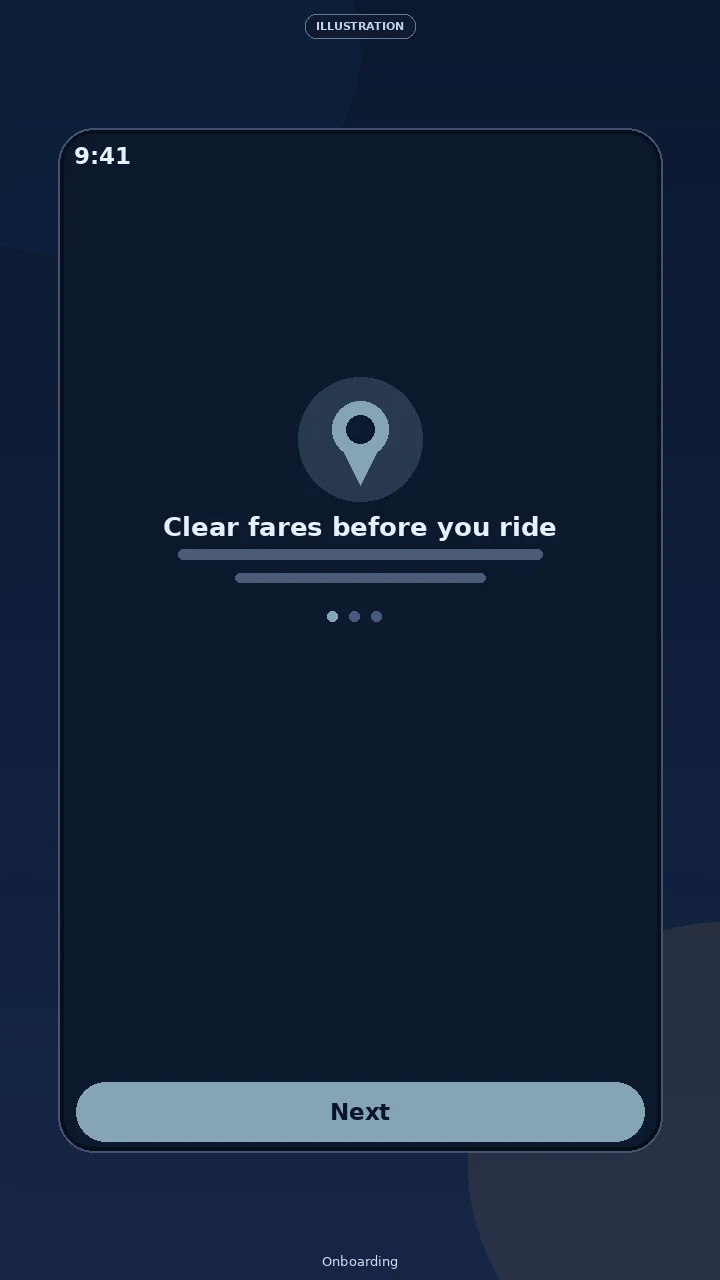
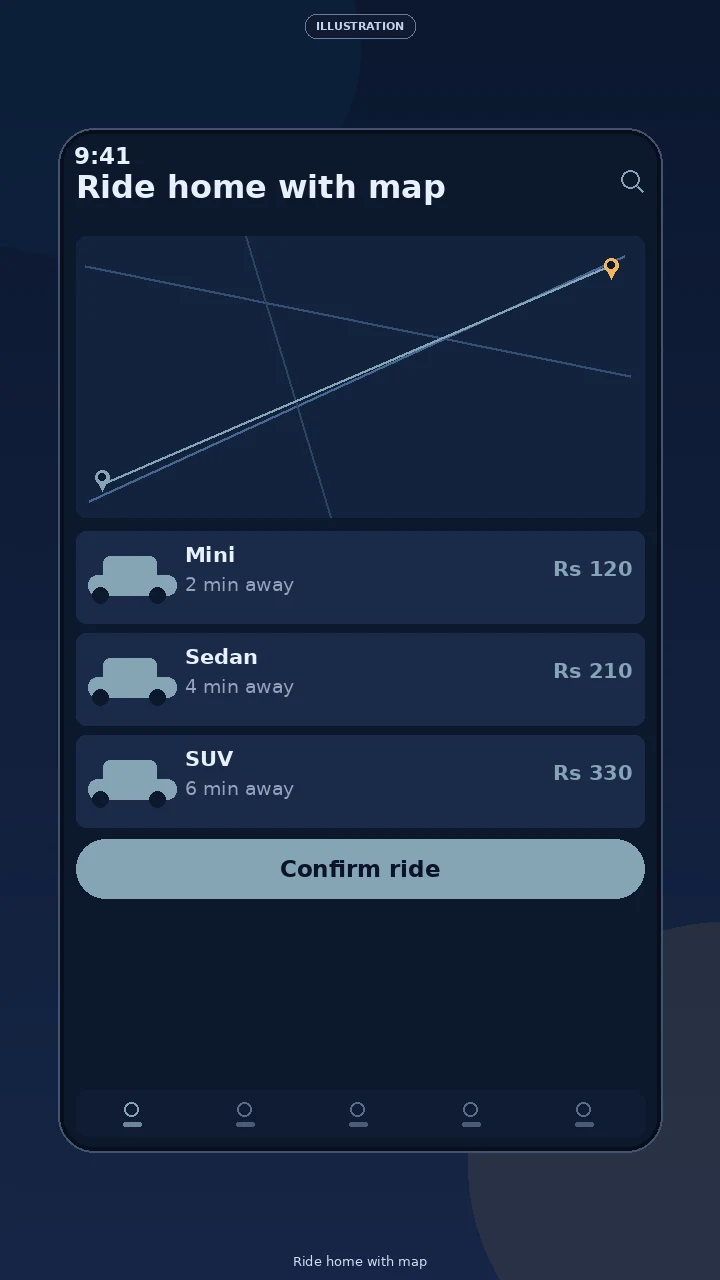
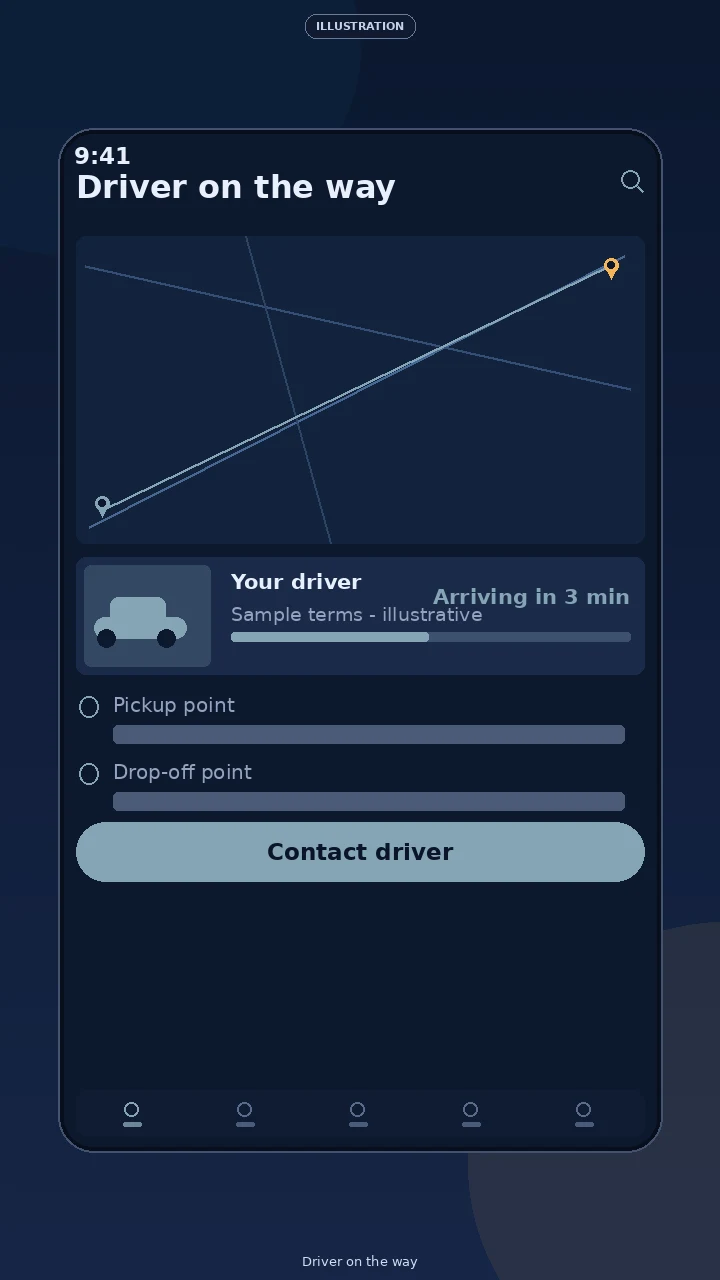
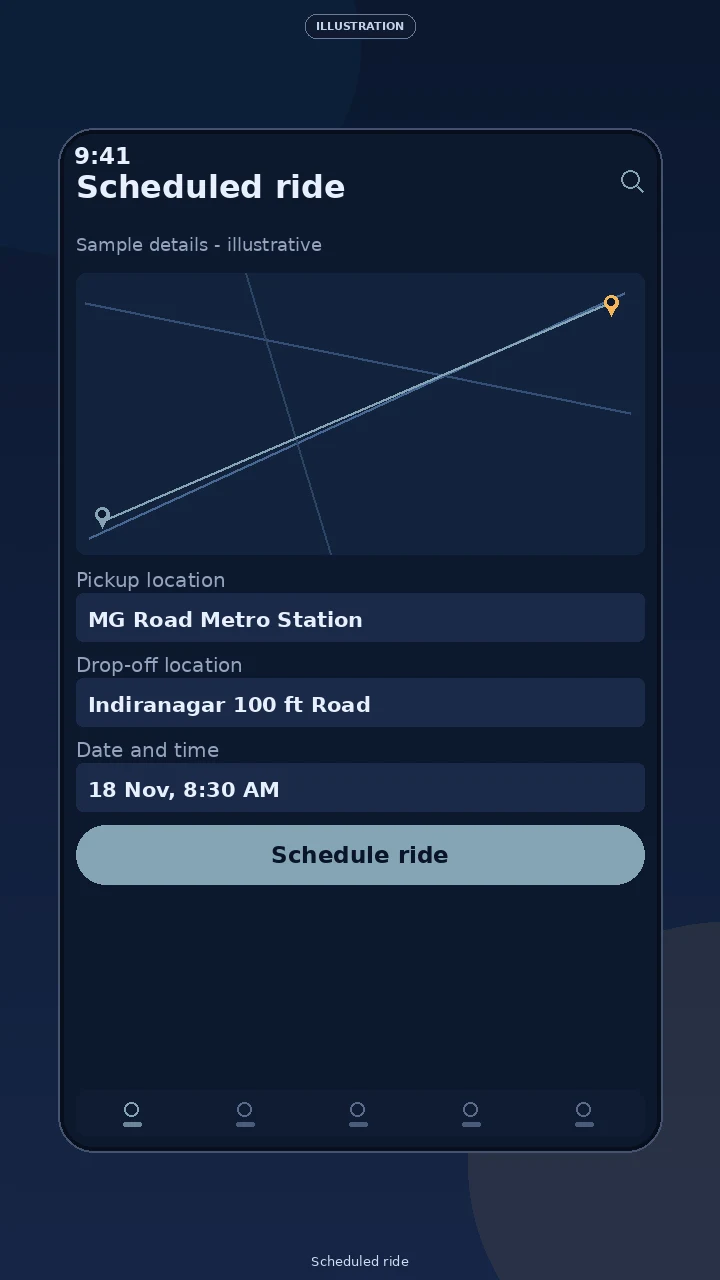
App walkthrough - illustrated concept

Generated illustrations of the proposed rider and driver experience. Illustrations, not working app screenshots; your build is rebranded and scoped in writing.

Illustration: Ubr Onboard in the proposed rider app
Onboarding - clear fares before you ride
Illustration: Ubr Home in the proposed rider app
Ride home with map
Illustration: driver on the way with live trip status in the proposed rider app
Driver on the way - live status
Illustration: Ubr Scheduled in the proposed rider app
Scheduled ride
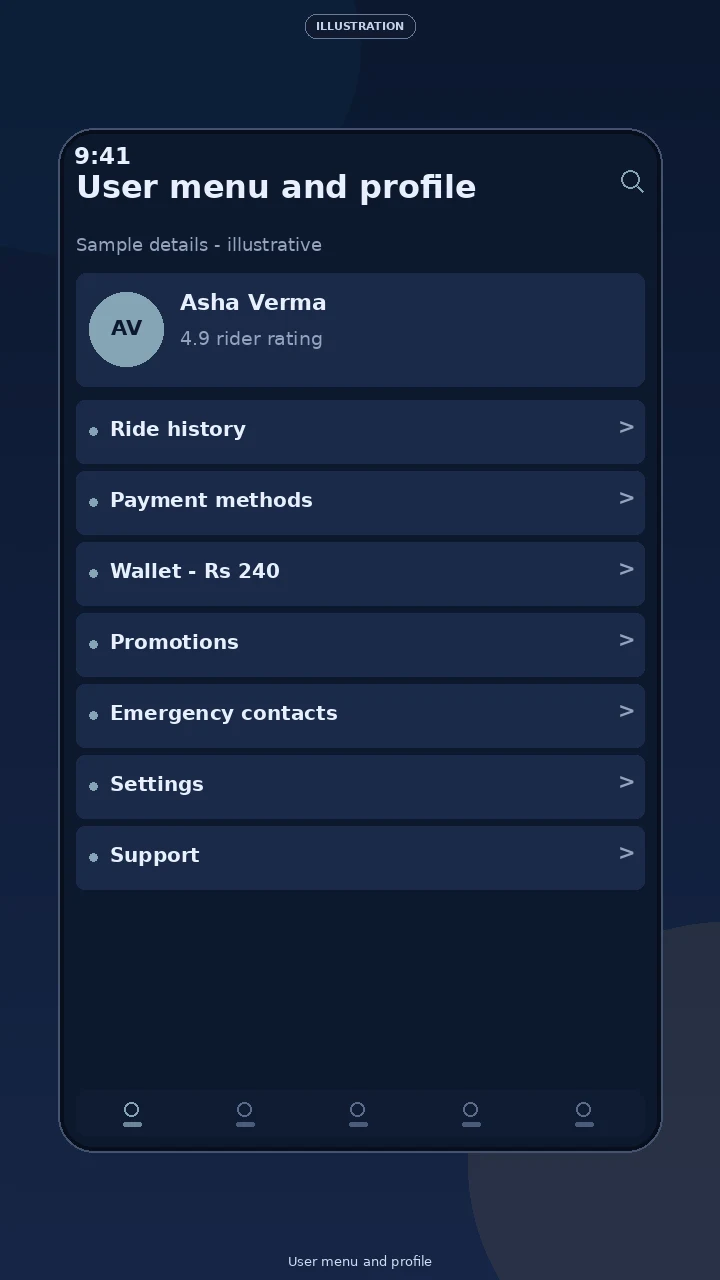
Illustration: Ubr Usermenu in the proposed rider app
User menu and profile
10 / Add-ons

Optional addons we can scope

Specialized additions we can scope on request, quoted separately.

In-Car Entertainment

Integration with various entertainment platforms, allowing users to enjoy movies, music, or podcasts during their rides.

Virtual Tour Guide

Landmark and attraction information shown during the ride.

Voice Commands

Incorporation of voice commands for navigation, communication, and other app functions, offering hands-free convenience for users.

Multi-Stops Ride

Multiple stops during one ride.

11 / How we work

How We Work With You: Clear Terms, Every Step

Six working rules for every engagement, fixed in the written scope.

  1. White-label rebrand

    Every app, panel and page under your name, your logo and your colours - a full white-label rebrand.

  2. Tested before handover

    Builds tested across devices and core flows before handover, inside written support terms.

  3. Clear pricing

    Pricing depends on your scope and is confirmed in writing before work starts. No hidden charges later.

  4. Scope in writing

    Every engagement starts with a written scope: modules, platforms, integrations and a quote you approve before anything is built.

  5. Staged delivery

    Each stage is demoed and approved by you before the next one begins.

  6. Full source code

    The complete, documented source code, handed over with your build.

12 / Terms

Terms we put in writing

The points we propose to fix in the written scope before any work starts.

  • Fully Customizable

    Customization so your deployment carries the exact features and flows your business needs, fixed in writing first.

  • Support terms in writing

    Proposed: a support window with response targets, set in writing before handover.

  • Bug fixes

    Proposed: a bug-fix window for your build, with its duration and coverage agreed before work starts.

  • Source code handover

    Proposed: handover of the complete source code, with usage and licensing terms set in the written agreement before handover.

  • Cost

    What to compare when weighing a clone-script base against a from-scratch build: scope covered, rebranding effort, integrations and any ongoing fees - each quoted in writing before any build starts.

  • Time

    The clone-script base is intended to shorten the build compared with a from-scratch start; your timeline is fixed in the written scope.

  • Expertise

    Proposed: configurations matched to your market, audience and payment mix for this app category, scoped in writing before work starts.

  • Security

    Proposed: security testing of your exact configuration before handover, agreed in the written scope; no security outcome is guaranteed.

  • Speed

    A performance goal of fast load and smooth flows, checked on your configuration before handover.

  • Efficient

    The goal: an efficient, working platform that fits your operation - scoped, quoted and agreed in writing.

13 / Two routes

Starting platform or custom build - what we propose

Two honest routes, compared. Pricing is quoted in writing; no price is stated here.

Custom from-scratch buildProposed starting-platform package
CostTypically the bigger investmentProposed as the lower-cost route; quoted in writing
TimelineTakes time; fixed in the written scopeIntended to shorten the build; timeline fixed in writing before work starts
CustomizationBuilt to your specificationProposed as fully customizable to your needs; updates scoped in the written agreement
Quality assuranceQA and code assessment proposed inside the written scope; no security result is claimed here
OutcomeWhether it lifts your taxi business depends on your market and execution; no growth is promised
14 / Feature notes

Feature notes for this build

Capability notes below describe proposed scope: every feature is configured to your project and agreed in writing before any build starts; nothing here is a promise of results.

ConceptFeatureCapabilitiesInclusionsMarketabilityRevenueProspects
Core platform features

Core capabilities the proposed ride-hailing package can include; each is configured to your project and agreed in writing before any build starts.

Real-Time Ride Matching

A rider request is matched to an available nearby driver, under matching rules you choose.

Multiple Ride Options

The vehicle catalogue can list classes such as taxi, rental, shared and premium.

Fare Calculation

Fares come from configurable rules - base, distance and time.

Live GPS Tracking

Riders and dispatchers follow an active trip on the map.

Driver & Rider Verification

Verification steps for drivers and riders.

Multi-Payment Integration

Cards, wallets and cash, through the gateways chosen during scoping.

User-Friendly Interface

A short booking flow: set pickup and drop-off, choose a vehicle, confirm.

Admin Dashboard

A web console for your team to manage users, drivers, fares, promotions and reports.

Reviews & Ratings

Riders and drivers can rate each trip; ratings are stored for your team to review.

SOS & Emergency Features

An in-app SOS option and emergency-contact flow can be included in scope; these features do not guarantee rider safety.

Essential app functions

Everyday functions the proposed rider and driver apps can include, all scoped in writing; results depend on your operations.

Rider & Driver App

Separate apps for riders and drivers, each with the flows its role needs.

Multi-Destination Booking

Multiple stops in one trip, with fares recalculated under your rules.

Dynamic Pricing Model

Fares respond to demand through rules you configure, including optional surge pricing.

Ride Scheduling Option

Advance booking for a chosen date and time.

Surge Pricing

Surge rules by time, demand and location, configured to your policy.

Wallet System & Promo Codes

An in-app wallet and promo codes, with rules you set.

Corporate Rides & Business Accounts

Company accounts with central billing for business travel.

Ride History & In-App Support

Past trips and support access inside the app.

Driver Earnings & Payout Management

Drivers see earnings in the app; payouts run on a cycle your admin configures.

Multi-Language & Currency Support

Localization into the languages and currencies your launch needs.

Platform, fleet and analytics

Back-office, fleet and analytics capabilities the proposed package can be scoped to include; outcomes are not promised.

Architecture planned for growth

The apps, API and admin console are separated so parts can grow with your operation; scaling targets are agreed per project.

Geofencing & Navigation

Service areas bounded by geofences; navigation through the connected map service.

Automatic Fare Calculation & Invoicing

Trip fares and invoices produced from your configured rules when a trip ends.

Demand Forecasting

Where historical trip data exists, demand patterns can be charted for planning; reporting, not prediction.

Fleet Management System

Fleet owners register vehicles and drivers and assign work from their own panel.

Real-Time Earnings & Trip Analytics

Dashboards show trips and earnings as they are recorded.

Integrated Chat & Call Support

Riders and drivers can message or call inside the app during a trip.

Admin & Dispatcher Panel

Dispatch, monitoring and manual assignment for your operations team.

Driver Matching

Assignment can prefer the nearest available driver, under your matching policy.

Loyalty & Referral Programs

Configurable loyalty and referral schemes, with rewards you set.

Proposed package scope

What a proposed taxi-booking package can be scoped to include.

User App (iOS & Android)

The rider app: booking, tracking, payment, history and support.

Driver App (iOS & Android)

The driver app: requests, navigation, earnings and payout status.

Admin Dashboard

The web console for your team: users, drivers, fares, promotions and reports.

Dispatcher Panel

Manual assignment and monitoring for bookings taken by phone or in person.

Wallet & Payment Gateways

The payment integrations chosen during scoping, plus the in-app wallet.

Fare Management & Surge Pricing

The fare rules, surge policy and cancellation fees your admin configures.

Live Tracking & Navigation

Map tracking for riders and dispatchers, through the connected map service.

Feedback & Ratings System

Two-way ratings after each trip, stored for your team to review.

Emergency Contact & SOS Feature

The SOS and emergency-contact flow, where included in scope; it does not guarantee rider safety.

White-Label & Custom Branding

Your brand name, logo and theme.

Market context - cited trends, not promises

Commonly cited market trends, listed as context for your own research. No figures or sources are given here; treat them as leads to verify for your own launch city, not promises of demand.

Rising Urbanization & Commuting Demand

Industry coverage links urban growth with ride-hailing adoption; your own market research should confirm it for your launch city.

Government Regulation and Ride-Sharing

Regulation varies by city and changes over time; we scope compliance checks for your launch region rather than assume them.

AI & IoT Enhancements

Industry coverage discusses automation and connected-vehicle features; anything in this class is optional scope, agreed in writing.

Adoption in Tier-2 & Tier-3 Cities

Industry coverage reports growth beyond metro areas; treat it as context, not a guarantee for any specific city.

Increased Business & Corporate Travel Needs

Corporate travel is a commonly cited buyer segment; whether it fits your launch is a scoping question.

Autonomous Vehicle Integration Prospects

Long-range industry speculation; nothing in the proposed package depends on it.

Digital Payments & Mobile Penetration

Commonly cited as adoption drivers; verify them for your own market.

Electric & Sustainable Rides

A cited consumer trend; vehicle choices in your fleet remain yours.

Subscription-Based Mobility Services

A cited business-model trend; it overlaps the subscription revenue option above.

Multi-Service Integration

A cited trend toward combining rides with food delivery or logistics; that direction is separate scope, agreed in writing.

Possible revenue options - income not promised

Possible revenue options for a proposed ride-hailing package. Income is not promised; what applies depends on your model and market.

Commission-Based Earnings

A percentage of each trip fare, set platform-wide or negotiated per driver or fleet.

Ride Fare & Service Charges

Per-ride fares plus optional booking or service fees, set in your fare policy.

Surge Pricing Revenue

Higher fares during configured surge periods, if you enable surge rules.

Subscription & Membership Plans

Recurring rider plans, such as discounted rides for members, if included in your scope.

Corporate & Enterprise Ride Partnerships

Billed company accounts for employee travel, if you pursue that segment.

Advertisements & Sponsored Promotions

In-app placements for partners, if you choose to sell them.

Driver Subscription Fees

A flat fee for drivers to receive requests, as an alternative to per-trip commission.

In-App Purchases & Premium Features

Paid upgrades such as priority support or premium vehicle classes.

Affiliate & Referral Incentives

Rewards for rider or driver referrals, with amounts set in your scope.

Fleet Leasing & Financing Services

An optional adjacent line, entirely dependent on partners you arrange.

Future technology trends - possibilities, not promises

Technology trends that may shape ride-sharing platforms. These are possibilities, not promises of what would be built.

Autonomous & AI-Driven Fleet Deployment

Long-range industry speculation; nothing in the proposed package depends on it.

Integration of Electric & Hydrogen Vehicles

Vehicle choice is yours; the apps do not depend on any vehicle type.

Traffic & Demand Forecasting

Where connected data exists, forecasts can inform planning; accuracy is not guaranteed.

Blockchain as a Payment-Transparency Option

Sometimes raised for payment transparency; we would review it separately and only on your request.

Predictive Maintenance for Vehicles

Telematics-based maintenance alerts are possible scope if you operate your own fleet.

Hyperlocal & Rural Expansion Strategies

Coverage expansion is an operating decision; the geofencing tools can support it.

Multimodal Transport Integration

Linking rides with bus or train schedules is possible custom scope, agreed in writing.

Voice & Gesture-Based Booking Assistance

Accessibility-oriented input options are possible custom scope.

Personalized Ride Experience Using AI

Personalization features are optional scope; their data use would be agreed in writing.

IoT Connectivity & Smart-City Integration

A cited infrastructure trend; any integration of this kind is separate custom scope.

15 / Process

The development process, without time promises

A build starts by understanding your requirements: purpose, goals and future targets. The starting platform is then configured to match the agreed scope.

Design

Screens and flows for your build, reviewed with you before implementation begins.

Rebrand

The Uber-style base is rebranded for your business: setup, configuration and the agreed modifications.

Test

The platform is tested against your requirements before deployment on the servers you choose.

Deploy

After internal quality checks, deployment follows; acceptance criteria are agreed in writing before launch.

Support

Support and maintenance continue under the terms agreed in writing.

16 / More categories

More app categories we work on

Other proposed bases we scope the same way include stays, food delivery, super apps, pharmacy and ride hailing. Live on this preview: 9flats (stays), UberEats (food delivery), Gojek (super app), 1mg (pharmacy), DoorDash (food delivery).

17 / Questions

Typical scoping questions

Everything in this section is proposed scope: the exact features, rules and terms are agreed with you in writing before any build starts. No timeline, result or income is promised.

Your launch - scope, timeline, support
What is your Uber Clone solution?

A customizable ride-hailing base. The scope can include apps for users, drivers, dispatchers and fleet managers plus an admin panel. Launch time is not promised.

How long does it take to launch my taxi business using your solution?

It depends on your scope and customization; the timeline is agreed before any build starts.

Is your Uber Clone solution scalable?

The base is designed so operations, features and integrations can grow with your business; scalability targets for your launch are part of the scope discussion.

Do you provide technical support and updates?

Ongoing support, fixes and updates are available as a separate agreed service.

Rider experience
How do I book a ride?

Enter pickup and drop-off, choose a vehicle type and confirm. Driver assignment depends on driver availability.

Can I schedule a ride for later?

Yes - the rider app can include advance scheduling, if chosen in the scope.

How can I track my ride?

Ride tracking and driver location on the map, with accuracy depending on devices and map services.

What payment methods are supported?

Cards, digital wallets and cash, depending on the gateways and methods you choose during scoping.

Can I cancel a ride?

Cancellation before confirmation; cancellation-fee rules are configurable.

Driver experience
How do I receive ride requests?

Drivers receive requests in the app and can accept or decline.

How does the fare calculation work?

Fares come from configurable rules: distance, time, base fare and optional surge pricing.

How do I get paid?

Driver earnings can be credited to a bank account or wallet on a payout cycle your admin configures.

What happens if a user cancels a ride?

A cancellation after driver acceptance can apply a configurable fee that compensates the driver, if enabled.

Dispatch and fleet operations
What is the role of the dispatcher?

The dispatcher can manually assign rides to drivers when users book through call centers or other offline methods.

Can dispatchers track all ongoing rides?

The dispatcher panel shows booked, ongoing and completed rides.

What if a driver cancels a ride?

Dispatchers can reassign a ride to another driver.

Can dispatchers override pricing?

The dispatcher panel can include manual fare adjustment for special cases, if enabled.

What is the Fleet Management module?

The fleet module lets fleet managers register and manage multiple drivers, assign vehicles and track ride performance.

Can fleet owners track driver earnings?

The fleet module can show earnings and commission details per driver.

How do fleet owners add new vehicles and drivers?

Fleet owners register drivers and vehicles through a fleet app or the admin panel.

Can fleet owners set commission rates?

Fleet owners can set commission structures based on their policies, if included in the scope.

Admin panel and branding
What features does the Admin Panel offer?

User and driver management, fare settings, analytics, reports and promotions.

Can I set surge pricing?

Surge pricing rules by time, demand and location, configured to your policy.

Can I monitor real-time ride activity?

Ride monitoring, with refresh rate depending on the services you connect.

How do I manage earnings and payouts?

Financial reports and driver payout management.

Can I customize the app branding?

Your brand name, logo and theme.

Omnistu is an independent software development project. We do not own or operate any of the services referenced on this website, and we are not affiliated with, connected to, sponsored by, endorsed by, or licensed by Uber or any other third-party company, product, or service referenced here.
“ Uber Clone” is used descriptively: it is how the software industry refers to building a platform with functionality similar to Uber, and how clients search for it. Third-party names and marks are used solely to describe the category and functionality of the software we develop, for identification purposes only; they remain the property of their respective owners, and their use does not imply endorsement. OMNISTU and the Omnistu logo are brand names used by Omnistu.

18 / Next step

Discuss your scope by message

Tell us what you want to launch and where. We reply by email with a scoped proposal - no calls required, no phone numbers collected.

PREVIEW ONLY - nothing you enter is submitted to or stored by Omnistu. The compose button tries to copy your scope text and open your own email app; if the copy does not work, the text appears below the button so you can copy it yourself. Nothing is sent until you press send in your own email app.
Which parts do you need? Email the team instead